NEW RAJ SIGNATURE JOURNAL
DESIGN NOTES — 153Blog
5 Best Types of Natural Stone for Luxury Home Facades
The facade of the house is the main element that determines the first impression when someone sees your house. Choosing the right natural stone for a facade not only improves aesthetics, but…
- PUBLISHED
- READING TIME
- 3 min read
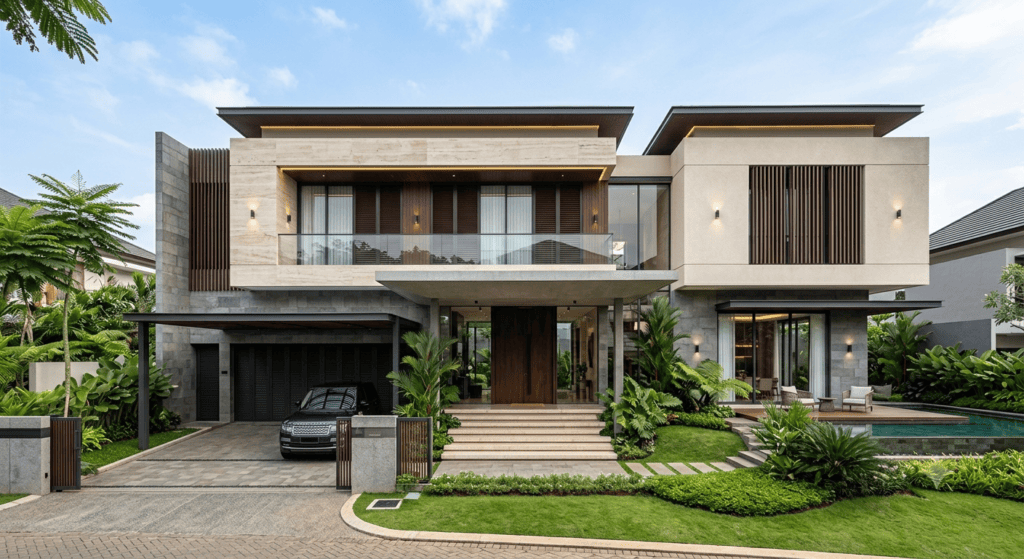
The facade of the house is the main element that determines the first impression when someone sees your house. Choosing the right natural stone for a facade not only improves aesthetics, but also adds property value. Here are the five best types of natural stone that we often use for luxury home facades, especially in Bali.
1. Andesite stone
Andesite is one of the favorite choices among owners of luxury villas and homes. This stone has a charming gray to black color and smooth texture. The strength and durability of andesite stone makes it ideal for withstanding the extreme weather that often occurs in Bali. In addition, andesite stone can be cut easily and installed in a variety of patterns, providing great design flexibility.
The advantages of Andesite stone, for example:
- Durable and strong.
- Resistant to weather and humidity.
- Minimalist modern aesthetic.
2. Temple Stone
Temple stone is often used in traditional Balinese architecture. Having a reddish brown color, this stone gives a warm and elegant feel to the facade of the house. Temple stone is also known to be easy to shape and carve, allowing for a variety of unique designs. Many hotel and villa entrepreneurs use this stone to create a harmonious atmosphere with the surrounding nature.
The advantages of temple stone, for example:
- Easy to shape and sculpt.
- Natural colors that add warmth.
- Suitable for traditional architectural styles.
3. Palimanan Stone
This stone comes from West Java, becoming a popular choice for luxury home facades that want to emphasize a natural impression. Palimanan has a soft cream or light yellow color, suitable for various architectural styles. However, its varied textures make it the perfect choice for creating a unique and attractive facade appearance.
The advantages of Palimanan stone for example:
- Bright natural color.
- Texture appeals to aesthetics.
- Suitable for modern and traditional architectural styles.
4. Crust stone
Crust or lava rock has a very unique appearance and attracts attention. With its black color and distinctive wrinkled texture, this stone gives a dramatic impression to the facade. Crust stone can be combined with other materials to create eccentric designs. Very suitable for commercial buildings or villas that want to emphasize strong character.
Advantages of Crust Stone for example:
- A dramatic and unique look.
- Ideal for contemporary designs.
- Resistant to extreme weather.
5. Marble Stone
Marble is widely known as a symbol of luxury. With a variety of patterns and colors, marble gives an elegant and luxurious impression to the facade of the house. Although more expensive than other types of stone, its beauty and durability make it a favorite choice for many villas in Bali.
Advantages of Marble Stone for example:
- Very elegant appearance.
- A variety of color and pattern choices.
- Increases aesthetic and property value.
Conclusion
Choosing natural stone for the facade of a luxury home is not trivial. However, each type of stone has its own advantages which can be adapted to the design needs and character of the building. From modern andesite to luxurious marble, the right choice will enhance the beauty and aesthetic value of your home. By understanding the characteristics of each type of stone, you can create a facade that is not only attractive, but also durable. If you are planning to build or renovate, consider this type of stone as the main option for your home facade.
Contact us:
- Visit the New Raj Signature Bali Website: New Raj Signature (Architecture & Interior)
- Consult your Custom Luxury Villa Design with New Raj Signature : 08885112222
END OF NOTE / 153
BACK TO TOPARTICLE SOURCE
From the official New Raj Signature archive. This version is automatically translated from Indonesian.
Read the original article